
Infrastructure is often measured by what can be seen.
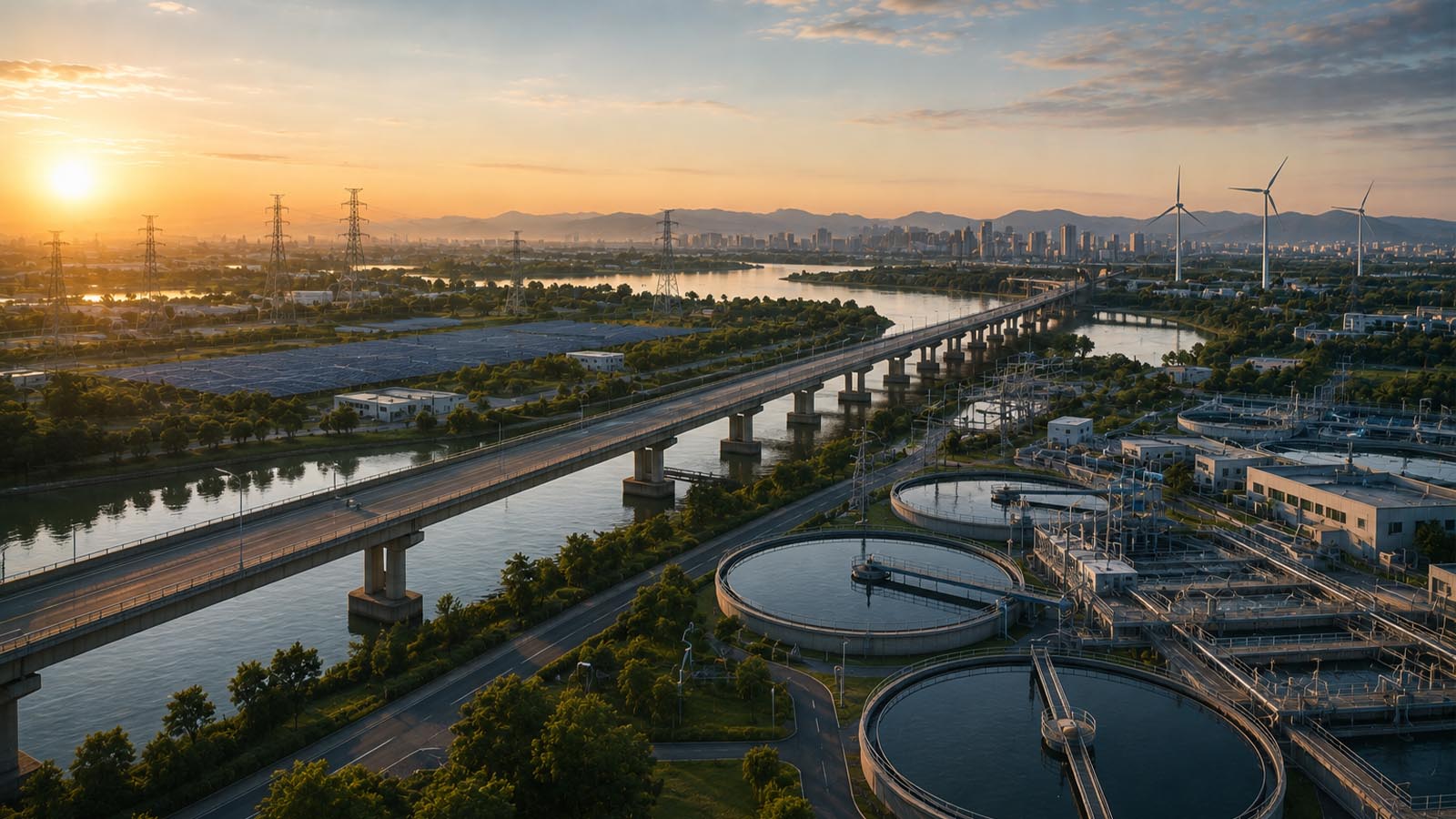
Roads. Pipelines. Power systems. Water treatment facilities. Industrial networks. Urban expansion.
Across industries and cities, development is usually associated with physical growth — larger systems, faster execution, and increased capacity. But modern infrastructure is no longer defined only by construction. The real challenge lies in how intelligently these systems operate after they are built.
A system may be structurally complete and still remain inefficient, unreliable, or unsustainable. This is where the role of infrastructure is changing.
From execution to intelligence
Traditionally, infrastructure projects focused heavily on execution. The primary objective was completion — constructing facilities, establishing networks, and ensuring operational functionality. Once systems became active, intelligence was often treated as secondary.
Today, that approach is no longer sufficient.
Water systems require continuous monitoring. Energy infrastructure must respond dynamically to changing demand. Environmental systems need accurate data to maintain safety and compliance. Facilities can no longer rely entirely on manual observation or isolated decision-making.
Modern infrastructure must think beyond operation. It must become responsive.
Why intelligence is now essential
This is why intelligence is becoming an essential layer across infrastructure systems worldwide. Monitoring technologies, automation, IoT integration, data-driven control systems, and predictive analysis are no longer optional enhancements. They are becoming critical components of reliability and sustainability.
The relationship between infrastructure and intelligence is especially important in high-responsibility environments.
In water infrastructure, a small failure in monitoring can compromise safety, operational continuity, and resource efficiency. In energy systems, unstable performance can disrupt industries and essential services. In environmental infrastructure, delayed responses can increase environmental impact and long-term operational risks.
The scale of infrastructure is important. But resilience is even more important.
Resilience comes from systems that can observe, adapt, optimise, and respond in real time.
Infrastructure as an integrated system
This is where infrastructure moves beyond construction and becomes part of a larger intelligent ecosystem.
At Viosimo, infrastructure is approached as an integrated system rather than isolated execution. Water treatment, renewable energy, environmental engineering, and intelligent monitoring are interconnected responsibilities. Each system affects another. Performance is strengthened when systems communicate, monitor conditions continuously, and operate with long-term awareness.
This is also why sustainability cannot be treated as a separate objective.
Sustainability is not an additional feature added after infrastructure is complete. It must exist within the foundation of how systems are designed, managed, and maintained. Intelligent systems improve efficiency not only for operational performance, but also for resource responsibility.
The shift already underway
The future of infrastructure will increasingly depend on the balance between engineering and intelligence.
Systems must not only function, but function efficiently. They must not only deliver output, but do so sustainably. They must not only support growth, but also adapt to uncertainty and future demands.
This evolution is already reshaping industries, institutions, and urban environments.
Renewable energy systems are becoming integrated with intelligent energy management. Water infrastructure is shifting toward automated monitoring and real-time analysis. Environmental systems are increasingly driven by data and predictive controls. Infrastructure itself is becoming more connected, responsive, and aware.
The future belongs to systems that evolve
The role of engineering is therefore expanding.
It is no longer limited to creating systems.
It now includes creating systems that can evolve.
Infrastructure beyond construction is infrastructure that understands performance, adapts to conditions, protects resources, and supports long-term resilience.
Because the future will not depend only on what is built.
It will depend on how intelligently those systems continue to operate long after construction is complete.