
Why water infrastructure must become intelligent
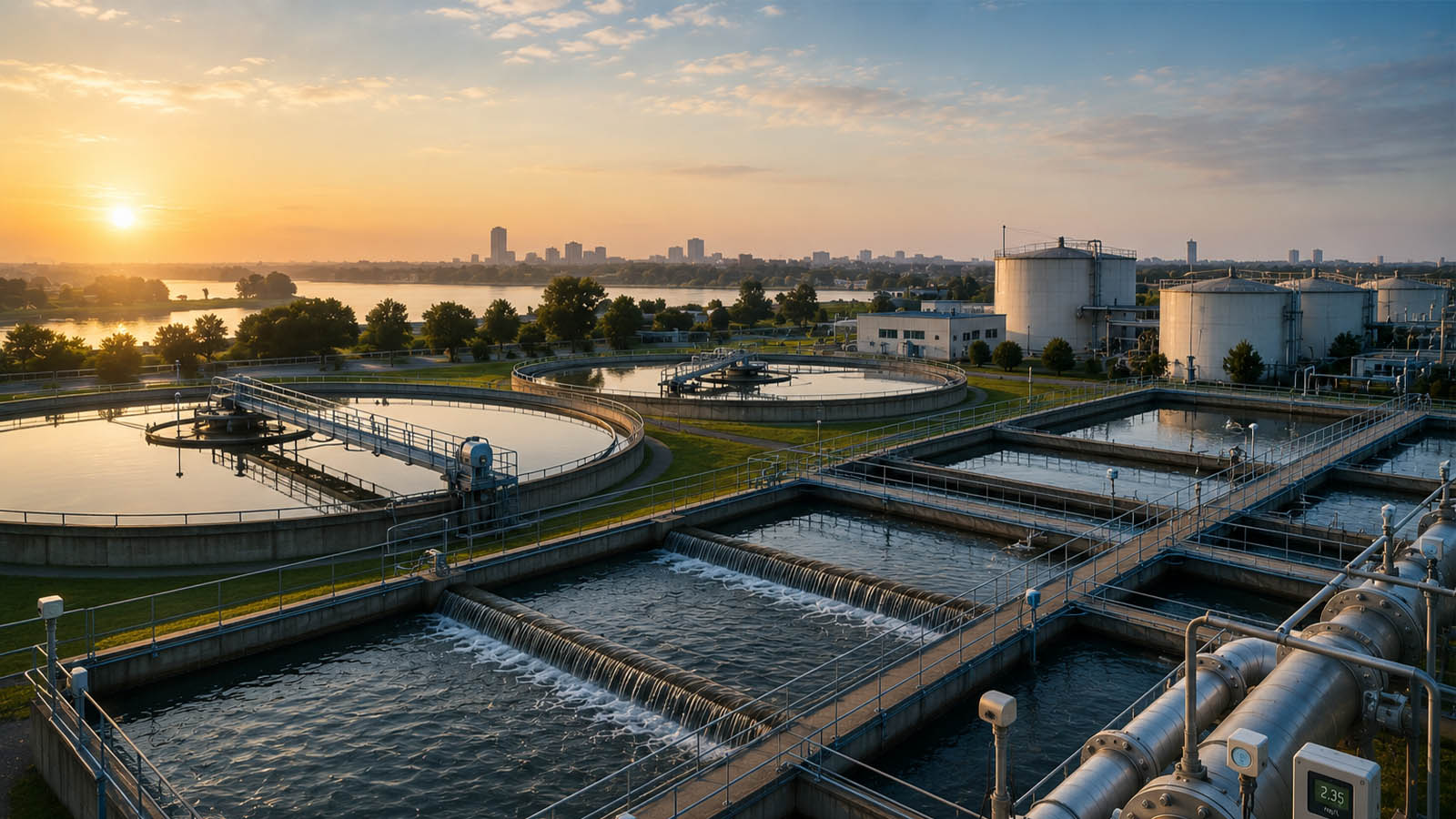
Aerial view of a water treatment facility with circular settling tanks, filtration channels, and monitoring systems at sunrise

Water infrastructure was built to move and treat water. For decades, that was enough. But the demands placed on water systems today are far more complex — and conventional infrastructure alone is no longer sufficient. This is why water infrastructure must become intelligent.
When infrastructure must think

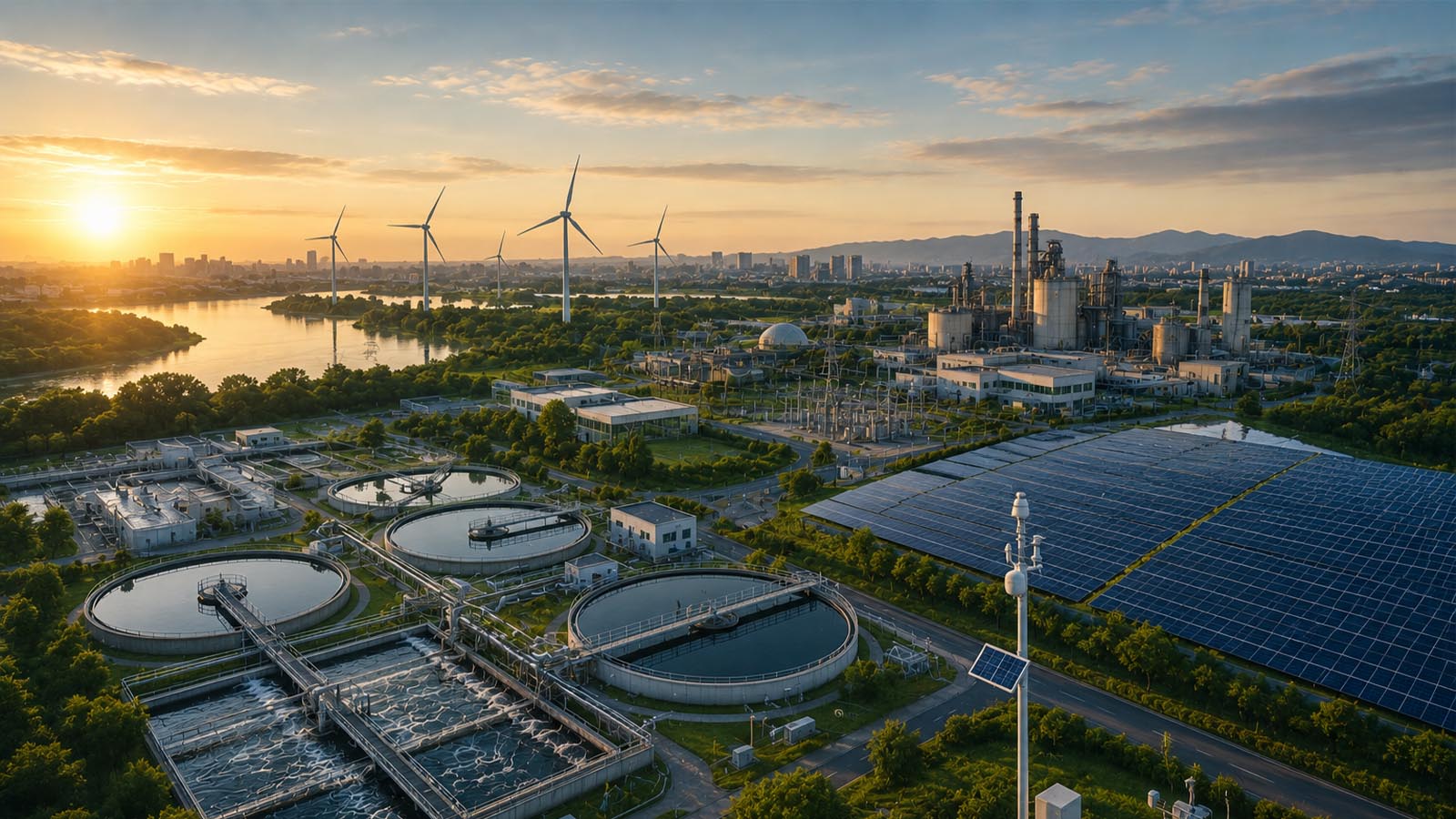
Aerial view of an integrated infrastructure facility combining water treatment, solar panels, wind turbines, and industrial systems at sunset

Infrastructure systems were once designed primarily for operation. But the environment in which infrastructure operates today has fundamentally changed. Reliability, safety, efficiency, and sustainability are no longer secondary considerations. This is why intelligence is becoming the most critical layer in modern infrastructure systems.

Beyond construction: The future of intelligent infrastructure

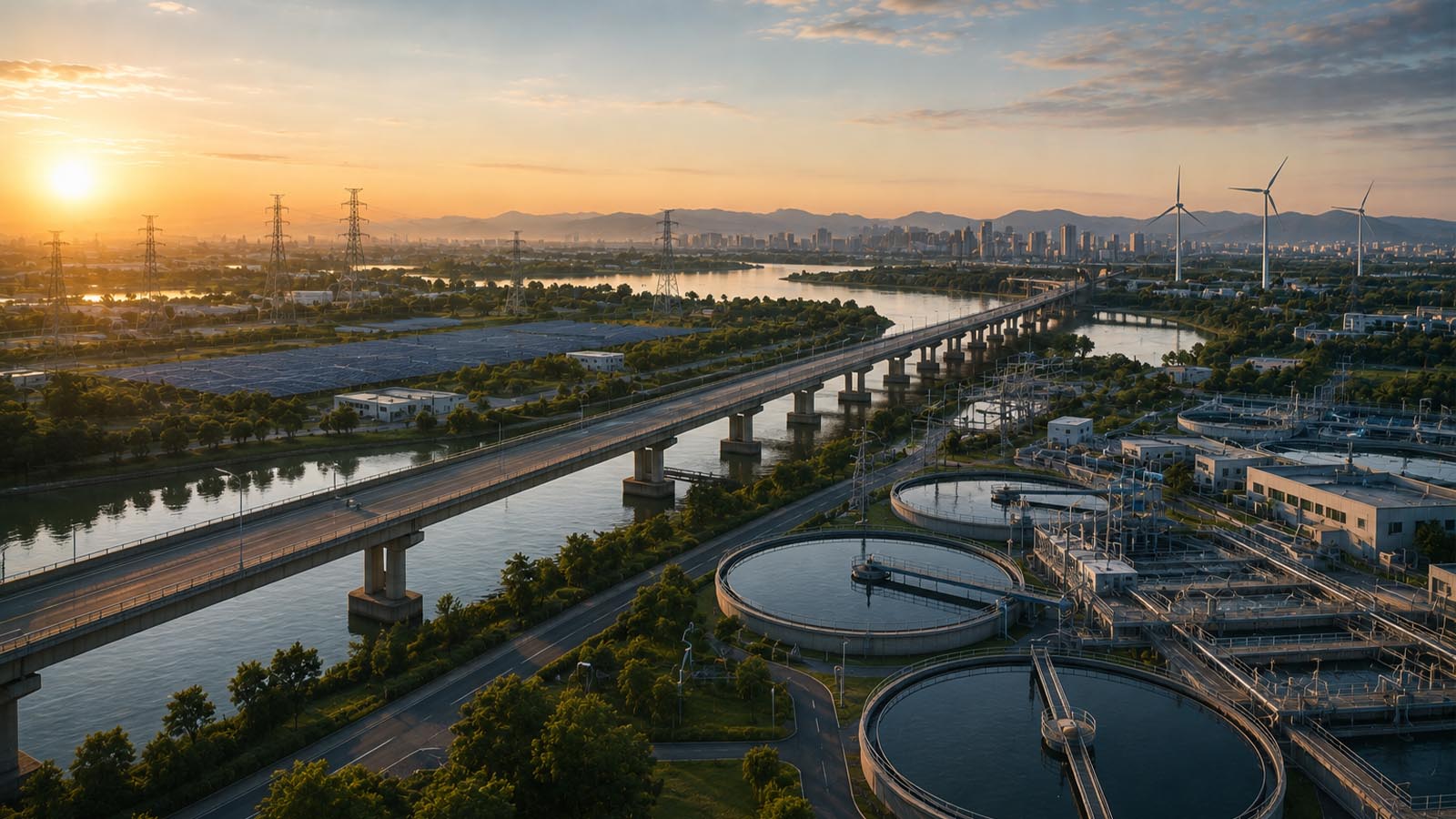
Aerial view of an integrated infrastructure landscape featuring water treatment facilities, solar panels, power transmission lines, wind turbines, a river bridge, and a city skyline at sunset

Infrastructure is often measured by what can be seen. But modern infrastructure is no longer defined only by construction. The real challenge lies in how intelligently these systems operate after they are built — and why the future belongs to systems that can observe, adapt, and evolve.